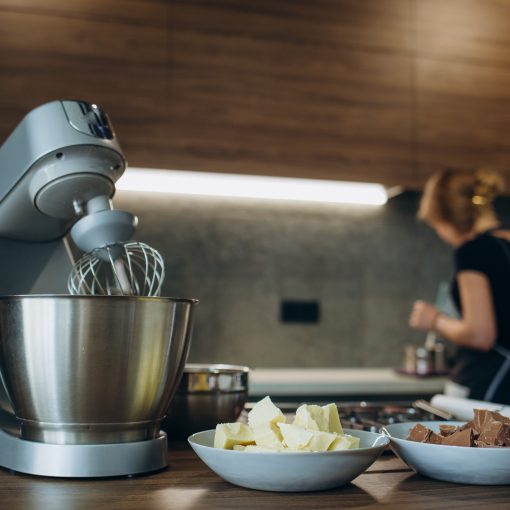
When a mixer starts then stops, it usually leaves you with one quick burst of power and then silence. Therefore, this pattern is a helpful clue because it often points to a safety cutoff, a load issue, or a control problem. At Mixer Repair Services, we treat that two second run as a “signal” and follow a simple check order before guessing parts.
Why “mixer starts then stops” is a useful symptom
A short start can mean the motor is trying, but something interrupts it right away. In other words, the mixer may be protecting itself from a condition it thinks is unsafe. Sometimes that condition is real, and sometimes it is just a worn switch or sensor sending the wrong message. Moreover, the stop timing matters, because an immediate stop suggests a different path than a slow bog down under dough load. Mixer Repair Services begins by repeating the symptom in a controlled way, so the same failure shows up on demand.
What we ask before touching the mixer
Firstly, we ask what attachment was installed and what speed was used, because a heavy load can expose weak electrical contact. Secondly, we ask if the bowl was locked correctly and if the head was fully latched, because many mixers use interlocks. After that, we ask if the unit recently overheated or smelled hot, since heat related faults often trigger quick shutdowns. To clarify, these questions help us decide whether to start with power delivery, protection circuits, or the drivetrain.
The fastest checks that explain a two second run
The goal is to confirm whether power is being cut or the motor is failing to stay energized. Consequently, we start with the simplest external causes and move inward. If you need a local team for mixer repair Calgary, Mixer Repair Services follows the same checklist on every brand, because the logic of the symptom is usually consistent.
Power path and cord strain
A cord that has been bent near the plug or tugged near the mixer base can create a momentary connection. Therefore, the mixer can start, arc slightly, and then lose voltage as the cord shifts. We check continuity under gentle movement, not just at rest. Likewise, we inspect the plug blades and the outlet fit, because a loose receptacle can mimic an internal failure.
Speed control and switch contact
Many “two second” cases come from worn contacts that pass current briefly and then open. For instance, a speed lever or rotary control can land in a spot where contact is unstable. We test the switch and control board output while the symptom happens, so we see whether the mixer is being told to stop. Most importantly, we look for heat marks, carbon buildup, and loose connectors that create intermittent power.
Safety interlocks and overload protection
Some mixers shut down if a latch, bowl lock, or thermal protector trips. As a result, a slightly misaligned latch can behave like a random failure, even though the unit is “doing what it was designed to do.” We verify mechanical alignment and check that interlock signals stay steady during vibration. Meanwhile, we inspect the thermal protector behavior, because a weakened protector can open too early even at normal temperature.
Brand specific patterns we see in the shop
Different designs fail in different ways, but the two second clue still helps narrow the cause. However, we avoid guessing based on brand alone and confirm with testing.
KitchenAid style mixers
With tilt head and bowl lift designs, the latch and control parts can create a quick stop symptom when they wear. In addition, a tired speed plate or loose connector can break contact the moment torque rises. If your unit shows the mixer starts then stops pattern, KitchenAid mixer repair from Mixer Repair Services focuses on control stability, load response, and proper calibration after repair.
Ankarsrum mixers
Ankarsrum mixers handle loads differently, so shutdown behavior can relate to drive load sensing, wiring, or control protection. That is to say, the unit may detect resistance and cut power quickly to prevent damage. We check the drive train for binding and confirm that the motor control is receiving clean input signals. If you need Ankarsrum mixer repair, Mixer Repair Services tests the mixer both unloaded and under a safe simulated load to confirm the fix.
Cuisinart mixers
Cuisinart units can show quick stop symptoms when switch assemblies, boards, or connectors loosen with vibration. Similarly, a worn brush or brush holder issue on certain motor styles can cause a short run then a stop when contact changes. For Cuisinart mixer repair, Mixer Repair Services checks electrical stability first, then confirms smooth mechanical rotation with no binding.
When to stop testing at home and call for help
If the mixer starts then stops and you hear clicking, smell heat, or see flickering lights, it is safer to stop. Therefore, repeated starts can worsen a failing connector, board, or motor component. Also, if the mixer stops while loaded and then restarts after cooling, that points to thermal protection or overload behavior that needs proper diagnosis. When time matters, same day mixer repair can get the unit assessed quickly, and Mixer Repair Services can explain what failed and why it created that two second pattern.
FAQs
Why does my mixer run for two seconds and then shut off?
This often happens when power is being cut by a loose connection, a worn switch, a safety interlock, or an overload protector. Consequently, the mixer starts normally but loses the signal or voltage needed to keep running.
Can a bad outlet cause the start then stop problem?
Yes, a weak outlet or a damaged cord can create a momentary connection. Therefore, the mixer may start and then drop out as the plug shifts or the outlet loses grip under vibration.
Is this symptom usually the motor failing?
Sometimes, but not always. In other words, many two second failures come from controls, wiring, or protection parts that interrupt the motor, not from the motor itself.
Why does it happen more when I mix dough?
A heavier load increases torque and vibration, so weak contacts can open and protection parts can trip. Moreover, binding in the drivetrain can raise resistance and trigger a shutdown.
Should I keep trying to restart it to “get it going”?
It’s better to stop if the symptom repeats. As a result, repeated starts can heat connectors, stress the control board, or worsen an intermittent fault and increase the repair scope.